


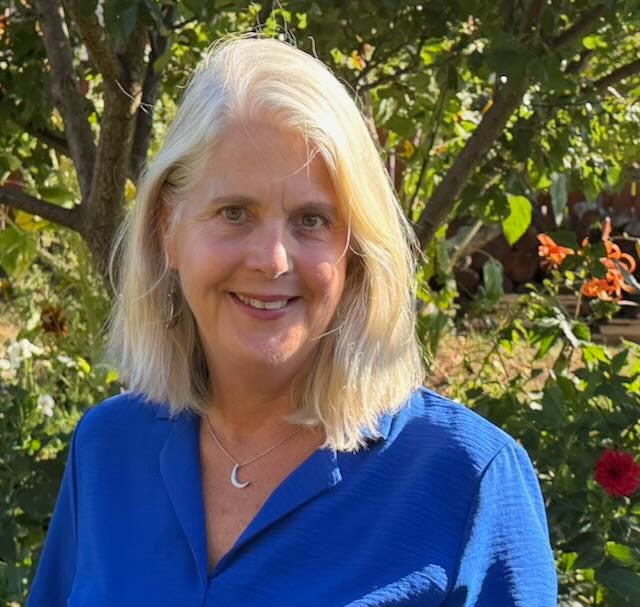
I’m eleven years old, riding in the back seat on a long car ride, with my little sister Betsey’s head in my lap. I’m singing “I Don’t Know How to Love Him,” from Jesus Christ Superstar. I love to sing, and I’ve spent hours in my room belting out my favorite songs into my little tape recorder. To my ears, I sound just like the album.
My mom whips her head around. “I don’t think you should sing that one. It’s not in your range. You’re off-key.” My dad, from the driver’s seat: “Yeah, that one’s not a winner.”
Betsey pipes up,“I like you singing it!” and I feel a flash of relief. But I stop singing that song when my parents are around. Then, a few years later, when I audition for the high school Glee Club, I see the music teacher wince as I reach for the high notes. I don’t make the Glee Club, and I stop singing altogether. At least in public.
These memories were just a couple of the childhood building blocks to what became a lifelong sense of inferiority. In preschool they told me I was coloring outside the lines, and that drawing did not look like a tree. As a kid with undiagnosed ADHD, I heard “you’re not trying hard enough” way too often. They saw I had the potential to get straight A’s in school. But, my wandering mind and impatience with the slow pace of the teachings had me skipping steps and earning B’s.
And so, I decided before I reached age 5 that I wasn’t good enough — and the evidence kept piling up. By adulthood I found myself struggling with a full-blown case of what we now call Imposter Syndrome: that nagging certainty that no matter what you achieve, you’re actually a fraud, and one day everyone will find out.
Maybe you know that feeling, but what if you weren’t bullied and put down as a child?
One thing I’ve learned through my work with clients is that the road to imposter syndrome is different for everyone. Maybe you weren’t the kid coloring outside the lines and getting the wince. Maybe it was the opposite — you were celebrated. Praised for being gifted, quick, the talented one. So why the heck do you now carry that same secret certainty that you’re a fraud who’ll be found out?
Hold onto that question. I’ll come back to it. First, another quick story.
When I became a business owner at age 24, that imposter syndrome really reared its ugly head.
I’ll never forget my first Chamber of Commerce mixer, there I was in stockings and a tight skirt I never wore, surrounded by older business owners in blazers. I’d been running my little herb shop for four years. When it came time to introduce myself and business, I lurched up to the front, nearly tripping over a dangling tablecloth, and heard my own voice shaking: “Hi, I’m Sarah, the owner of Moonrise Herbs.”
And inside my head I could hear that inner critic roaring: Who am I to think I belong up here? I started this business without a speck of experience. I didn’t even know much about herbs when I began.
The weirdest part? The more successful Moonrise became, the worse the imposter feeling got. People admired me for building this beautiful thing. But I was sure the seasoned herbalists were whispering, “who does she think she is?” The neighboring shop owners regarded me with raised eyebrows as I biked into work with my toddler on the back.
The customers loved it, but beneath the admiration I secretly knew I wasn’t nearly as amazing as they thought — they didn’t know about the scared little girl inside, the nightly wine with my husband while selling healthy products by day. They didn’t know.
You have your own version of that list, don’t you? The gap between what they see and what you’re sure is true.
For years I believed the fraud story. And believing it cost me — it kept me in my seat when I wanted to stand and speak, kept me from throwing my hat in the ring for new opportunities after I sold the store, kept me believing I didn’t really have any talent.
That inability to believe in my own worth was just one more way I abandoned myself, over and over.
Then, over time, I began to understand something that finally loosened its grip: that imposter — the one insisting you’re a fraud — is not actually you. It’s a part of you. A frightened, protective part carrying a very old belief. And when you stop being it and start simply seeing it, with curiosity instead of contempt, you begin to remember the truth you couldn’t hear underneath its shouting: your worth is not conditional on your achievements. It never was. You are whole simply because you exist.
It’s a huge reframe, and NOT what we grow up learning. I’m still integrating this truth myself. But even half-learned, it has changed how I regard myself.
When I started writing about all of this in my book, Unabandoned, I suddenly understood about the two sides of imposter syndrome. I had always thought that was something that other people, the more talented ones, struggled with. For most of my life I didn’t actually feel like an imposter, I just thought I was flawed. It turned out this was just a different version of imposter syndrome.
My imposter syndrome grew out of feeling never enough — the sensitive kid who took in every wince and decided she was inferior. But there’s a whole other road to the very same fraud-feeling, and it comes from the opposite direction.
The golden children — the ones who were celebrated, praised for being gifted, quick, talented; the ones rewarded for their excellent performance — so many of them arrive at adulthood with the identical secret thought that they’re frauds who’ll be found out. They worked hard to measure up to those expectations. Sometimes they were compared to siblings who excelled even more. They kept hitting the goals, but it never felt like enough.
Two completely different childhoods. The same middle of the night dread.
How both roads lead to the same place — and how you begin to find your way out of whichever one is yours — is what I unravel in my book, Unabandoned.
Because whether you were the never-enough kid or the golden child, the “fraud” who’s been running the show was never the real you. She’s just a part of you, who’s been waiting a very long time for someone to tell her the truth.
You’ve been so sure you’d be found out. What if there was nothing to find — except you?
This essay is part of a series on the ways we abandon ourselves — and find our way back.
Are You a Closet Perfectionist? — on the inner judge who’s never satisfied
Stop Shaming Yourself for Being a People-Pleaser — on why it’s your nervous system, not a flaw
All three are drawn from my book, Unabandoned.
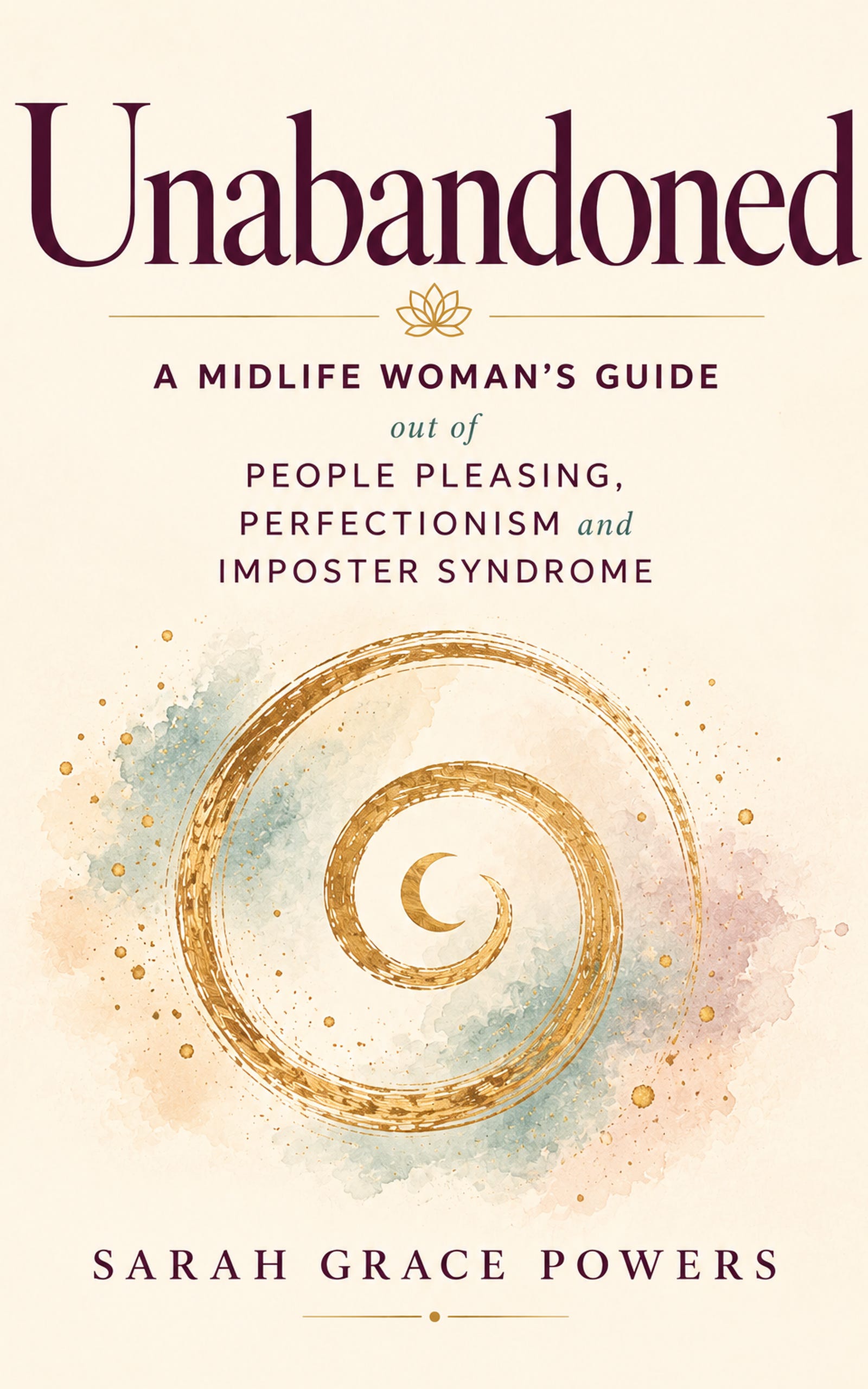
About the Book:
Unabandoned: A Midlife Woman’s Guide Out of People Pleasing, Perfectionism, and Imposter Syndrome
You did everything right. You became the one everyone counts on. So why the hum of discontent that wakes you at 3 a.m.?
Unabandoned is part memoir, part field guide — the friendly company of someone who walked this ground just ahead of you, reaching back. You’ve left yourself behind for so long. This is the invitation to stay.
Out September 26th — you can preorder right here.
Or, subscribe below to stay in the loop.