



Are you the kind one? The agreeable one? The one who checks what everyone else wants before you even consider talking about what you want — and then half the time you don’t even get a chance to say it?
For a lot of us, this way of being in the world just became who we are. And why not — we get such lovely feedback for it. People want us around. Selflessness is an admired trait. So you go along, keeping things harmonious, and after a while you sort of lose touch with what you even want anyway. If they’re happy, you’re happy, you tell yourself. Why rock the boat?
But then — somewhere north of 40 — something shifts. A little resentment starts leaking in when you’re craving Italian and find yourself, once again, at the burger place with your husband and the kids. Or you read an article, maybe a whole book, that puts down people-pleasing. And the uncomfortable knowing creeps in: Shit. I’m a people-pleaser.
So you resolve to stop. Set some boundaries. Speak up.
And here’s where it gets frustrating — because you can’t. You try to speak up with your true opinion, and the words stick in your throat. There’s a sinking in your stomach. A shrinking that moves through your whole body. Your mind made a decision, and your body overruled it.
Those sensations are exactly what I’m talking about here: your urge to agree is not weakness. It’s wiring.
What we call people-pleasing is, in nervous-system terms, the Fawn response. You’ve probably heard of fight-or-flight — the ancient survival wiring that kicks in when a lion jumps out of the bushes. But it turns out that stress response has more than two settings. It’s fight, flight, freeze, or fawn. Some animals, faced with a bigger predator, don’t run and don’t fight — they roll over, they appease, they make themselves agreeable to survive. So do we.
In modern life there’s rarely a lion jumping out of the bushes. But your nervous system can’t always tell the difference between a life-or-death threat and a social one. A quizzical look from your boss, a short tone from your spouse, a friend who might disagree — your body reads danger and reaches for the oldest tool it has. Before a single conscious thought forms, you’re smiling and nodding. Saying yes when the truth is no. “I’m doing fine,” when you’re not.
The truth is, for most women it was dangerous to buck the status quo until fairly recent times. We could be beaten, cut off financially, punished, put in asylums for hysteria, burned at the stake.
That history is real, and it lives in the body. So if you’re a dyed-in-the-wool people-pleaser, it’s just your nervous system doing exactly the job it was built to do.
That doesn’t mean you’re doomed to a lifetime of agreeing when you don’t want to. But it does mean the way out isn’t through more self-criticism. What you resist persists. You cannot scold your nervous system into safety.
Ask me how I know.
Long before I ever heard the term “people-pleasing,” I’d beat myself up for being such a weenie — for going silent, nodding along, when I had another opinion sitting in my throat. I was certain it was one more flaw in an already-flawed personality. It wasn’t until I learned that these responses are unconscious — that they can’t be controlled by sheer willpower — that something in me finally softened.
I spent way too much time feeling bad about myself for my people-pleasing tendencies. I’ve come a long way in my quest to speak up in a group, and to stand up for what I truly believe. To say No, when I don’t have the capacity. And yet, that old urge to make sure everyone’s okay still pops up. But now, I’ve learned to explore that in a spirit of curiosity and compassion instead of self-criticism.
I get to ask myself, is this authentic kindness coming from my heart… or is it fear dressed up like kindness? That’s a real distinction, and learning to recognize it has changed everything.
So if you’ve been shaming yourself for being a people-pleaser — if you feel trapped in the reflex even though you can see it now — here’s my invitation: start with grace. Just a little. Not because you’re letting yourself off the hook, but because compassion, it turns out, is the only thing the nervous system actually responds to.
Why are some of us more prone to people-pleasing and the Fawn Response than others are? And how can we shift it? I explore these questions in more depth in my book, Unabandoned: A Midlife Woman’s Guide out of People Pleasing, Perfectionism and Imposter Syndrome.
You’ve been so good at making sure everyone else is okay. This is the invitation to finally include yourself.
About the Book
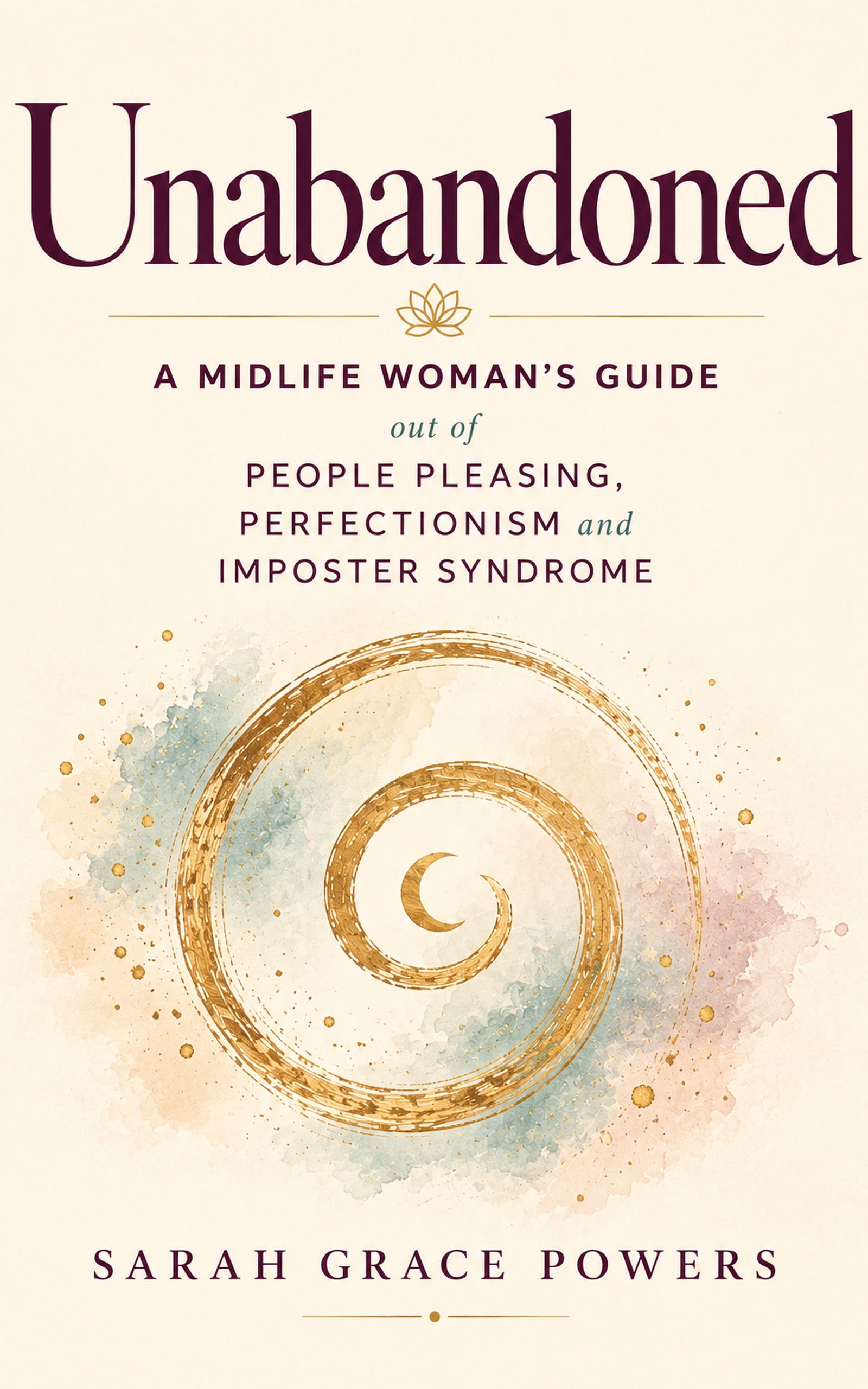
Unabandoned: A Midlife Woman’s Guide Out of People-Pleasing, Perfectionism, and Imposter Syndrome
You did everything right. You became the one everyone counts on. So why the hum of discontent that wakes you at 3 a.m.?
Unabandoned is part memoir, part field guide — the friendly company of someone who walked this ground just ahead of you, reaching back. You’ve left yourself behind for so long. This is the invitation to stay.
Out September 26th, you can preorder it now → right here.
Not ready yet? Subscribe below and I’ll tell you the moment it’s live.
Congratulations! I just bought your book and am really looking forward to reading it! So happy for you!