


Tall, skinny as a rail, blondish hair cropped short, my mom’s friend Binnie Carlson yelled at us kids while a cigarette dangled from her red lips. Leather belt at the ready, she wasn’t afraid to wield it even on kids who weren’t her own. Mrs. Carlson was the one who pulled me aside at age eight to deliver a serious lecture on the perils of getting fat.
“Sally,” she said (calling me by my childhood name), “Come sit down over here. I want to talk to you about something.”
With trepidation, I sat beside her in the kitchen. My mother was nowhere to be found. Was she out on an errand? Was I in trouble?
“I’m getting really worried about you,” Mrs. Carlson said. “I see you are getting bigger, and I don’t mean taller. And I just saw you eating two bowls of ice cream.”
I squirmed in my chair.
“When I was a little older than you,” she continued, “I got very fat. It was miserable. Nobody liked me, and I felt so ugly. It took me a long, long time to lose all that weight. I didn’t have any friends until I lost weight.”
“Am I fat?” I asked, frowning with concern.
“Not yet,” she responded. “But it could happen soon if you keep eating like this. I’m trying to help you. I hated being fat. It was the worst thing ever. You need to be very, very careful about what you eat. I can already see that you could end up like me if you just eat whatever you want.”
* * *
I’m paraphrasing this conversation, of course—after nearly 60 years, I don’t remember it word for word. But what I do remember is how my mother’s best friend droned on and on for what seemed like hours, pretending she was kindly warning me about a real danger. And I suppose to her it wasn’t pretending. I now suspect that Binnie Carlson was existing on diet pills and cigarettes. But, to me, she was the adult voice of authority.
I suddenly looked at my reflection with new eyes. I began to wonder if others saw what Mrs. Carlson saw. And I felt ashamed.
And thus (oh thank you Binnie!) was born a lifelong obsession with my weight. Of course I’m not alone on that one; in fact I can probably count just about every woman I know as good company.
You’re already familiar with the idea of the Inner Critic—we all have one, and they don’t just specialize in body shaming. Your critic likely inspects your work performance, your parenting, basically everything you do and points out all the shortcomings. The critic arises early in life.
There are scores of books and hundreds of pieces of advice on managing your Inner Critic so you can function in the world, especially if you are trying to create new things or somehow stand outside of societal norms. One of the best pieces of advice I’ve found is to personify your Inner Critic—to give them a name. This externalizes the critic and helps you remember that she might not always be right.
I immediately knew my critic’s name would be Binnie. But, when working with clients, and in my writing, I often dub this part the Inner Mean Girl, or the Bitchy Inner Critic.
I named mine for that not-so-well-meaning friend of my mother’s. Why? Well, in addition to the fat-fear lecture I had to endure, we kids were terrified of her. I can now see that she was a profoundly unhappy woman, but she hid it well. Like Binnie, my Critic acts like she has it totally together, but inside she is frightened and worried. Mrs. Carlson took out her hostility on others. She was mean—to her kids, to other people’s kids, and in the way she talked about other women.
There is value in giving a name and personality to that inner voice that is constantly throwing out barbs. It helps you to separate from her and to see more clearly what’s happening when your mind descends into that litany of self-blame and recriminations.
Sometimes—even to this day—I forget to separate myself from Binnie’s voice in my head though. I start believing her. She berates me not just about my thickening post-menopausal waistline, but about the quality of my work, my failed marriage, and above all my so-called laziness.
She’s harping in my ears when I decide to take a rest, if I take a bite of dessert, and when I wrap the day having failed to exercise or hit all the items on my endless to-do list.
It’s easy to fall into a spell when your Inner Mean Girl takes the wheel. It’s a spell of unworthiness, and only by recognizing that this voice is not Truth, but an illusion created by shame and societal programming, can you break this spell.
Your own Bitchy Inner Critic probably started harping away inside your mind before you reached the age of six. And then you started school! And boy, did she kick into gear then!
Fighting with your Bitchy Inner Critic never brings real relief. Binnie (and her team of critics) had me in a vise grip for most of my life and, even though I knew that I had some valuable traits and gifts, they seemed puny and ineffectual in the face of the barrage of constant criticism.
I’m sure you are all too familiar with your own Inner Critic—even if you haven’t given her a name yet. The critic is part of you, but is not you. It’s important to understand that she is one of many inner parts that we all carry inside of us. Even though internal critics can seem like the enemy, they are just trying as hard as they can to keep us safe—to make sure we are not rejected and criticized by others.
The Inner Critic is born in response to the shaming and criticisms of those we trust or depend on. It’s the part of us that is responsible for catching all of our screw-ups first—before someone else can shame, criticize, or reject us because of them.
It’s a thankless task, because there are always more screw-ups and no matter how hard that critic works, she can never keep you impeccably perfect. No matter how strong our team of critics becomes, we are still human. And humans make mistakes.
Whose voice does your inner critic speak with? And if you were to give them a name, what would it be?
The above passage comes from my book, Unabandoned, Chapter 3 — The Rise of the Inner Mean Girl (Inner Critic). Although the book is titled Unabandoned: A Midlife Woman’s Guide out of People Pleasing, Perfectionism and Imposter Syndrome, I also write about other self-abandoning patterns beyond those three. Giving our inner critic too much power is a big one. In the book you’ll learn about how that inner critic acts as just one of many internal parts.
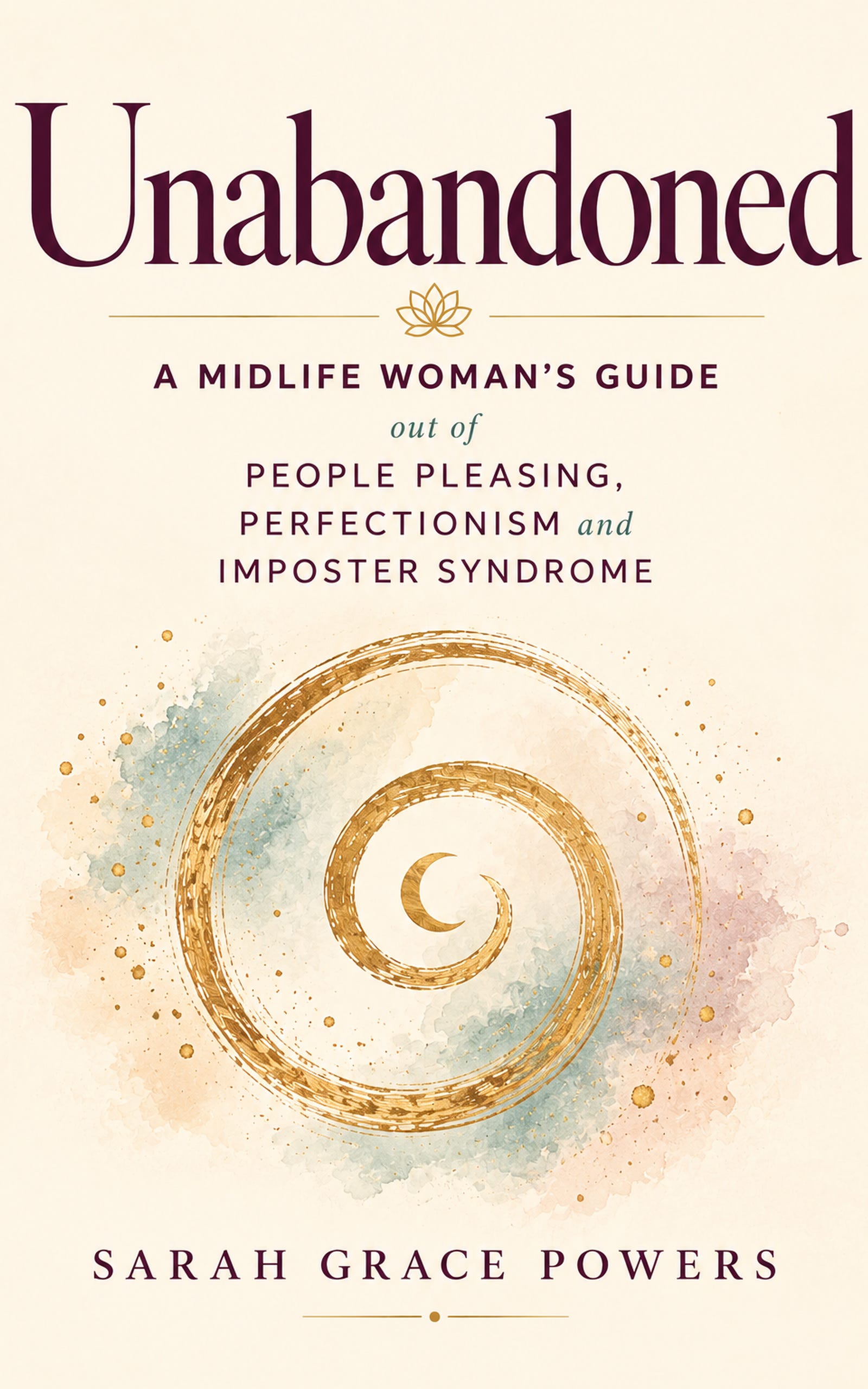
About the Book:
Unabandoned: A Midlife Woman’s Guide Out of People Pleasing, Perfectionism, and Imposter Syndrome
You did everything right. You became the one everyone counts on. So why the hum of discontent that wakes you at 3 a.m.?
Unabandoned is part memoir, part field guide — the friendly company of someone who walked this ground just ahead of you, reaching back. You’ve left yourself behind for so long. This is the invitation to stay.
The ebook is just $4.99 for the launch period, going up to $8.99 later this fall. You don’t need a Kindle device to read it; the free Kindle app works on any phone, tablet, or computer. Prefer to hold it in your hands? The paperback is available too, at $12.99.